
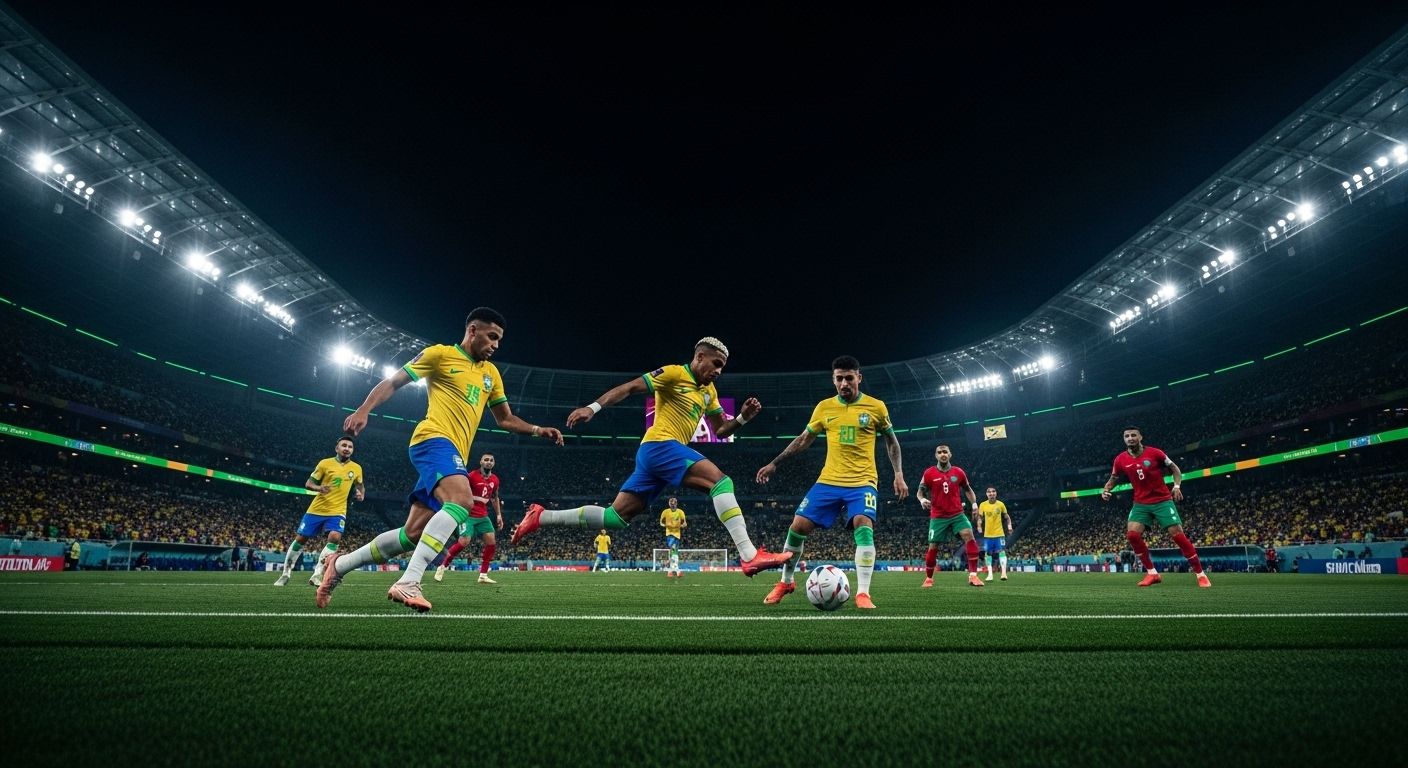
The Hexa Mission: Why Brazil’s Opening Test Against Morocco Defines the New World Cup Era
Brazil faces Morocco in a high-stakes 2026 World Cup Group C opener. Ancelotti’s 4-2-4 tactics meet Morocco’s evolved possession game in this tactical breakdown.
The sprawling, 48-team architecture of the 2026 FIFA World Cup was designed to prevent exactly what Brazil is facing today at the MetLife Stadium: a high-stakes opening fixture against an opponent that no longer recognizes itself as an underdog.
The Tactical Pivot: Ancelotti’s 4-2-4 Ambition
Carlo Ancelotti has shifted Brazil toward a transition-focused 4-2-4 formation. By deploying four attackers, including Vinícius Júnior and Endrick, Ancelotti aims to compress the pitch and bypass traditional midfield construction. However, with Neymar sidelined due to injury, the creative burden rests on the wide forwards, potentially leaving the center of the pitch vulnerable to counter-attacks.
The Atlas Lions: From Wall to Weapon
Morocco is evolving from a defensive unit into a possession-seeking powerhouse under coach Mohamed Ouahbi. Achraf Hakimi remains the team’s tactical fulcrum, enabling creative talents like Brahim Díaz to overload central areas. Now ranked 7th globally, Morocco is no longer a tournament disruptor but a genuine contender aiming to dictate the tempo against the Seleção.
The 48-Team Equation
The expanded format means that while the penalty for an opening-match loss is lower, the psychological pressure on a team like Brazil remains immense. For Morocco, this match is an opportunity to cement their status as a global giant rather than a dark horse. The result will likely be determined by who best manages the transition pockets in the midfield.